Setting the Standard in Nasal Surgery

The best surgical outcome is one where you can't quite put your finger on what changed. Dr. Mariel O. Watkins is uniquely equipped to achieve just that. A fellowship-trained facial plastic and reconstructive surgeon who completed advanced training at Washington University in St. Louis—one of the most respected programs in the country—Dr. Watkins brings a rare combination of surgical precision, artistic sensitivity, and a deeply personalized approach to every consultation. Her philosophy of facial longevity means she's thinking about how you'll look in ten to twenty years.

What Is Preservation Rhinoplasty?

Rhinoplasty has evolved significantly over the past two decades. The traditional approach, known as structural or reduction rhinoplasty, involves removing cartilage and tissue, then reconstructing the nose in a new shape.

Preservation rhinoplasty  is ideally suited for patients with a hump or a bump on the bridge of their nose.

Rather than removing the nose's structural framework, Preservation rhinoplasty preserves it by repositioning and refining without reconstruction. Keeping the ligaments, cartilage, and soft tissue envelope largely intact means:

  • Less surgical trauma to the surrounding tissue
  • Faster, more comfortable recovery
  • Results that move and feel like your own nose

It's particularly well-suited to dorsal reduction, which differs from traditional rhinoplasty in that it preserves the structure rather than breaking it down and rebuilding it. Preservation techniques lower the dorsum as a single continuous unit, maintaining the natural relationship between bone and soft tissue.


Banner media
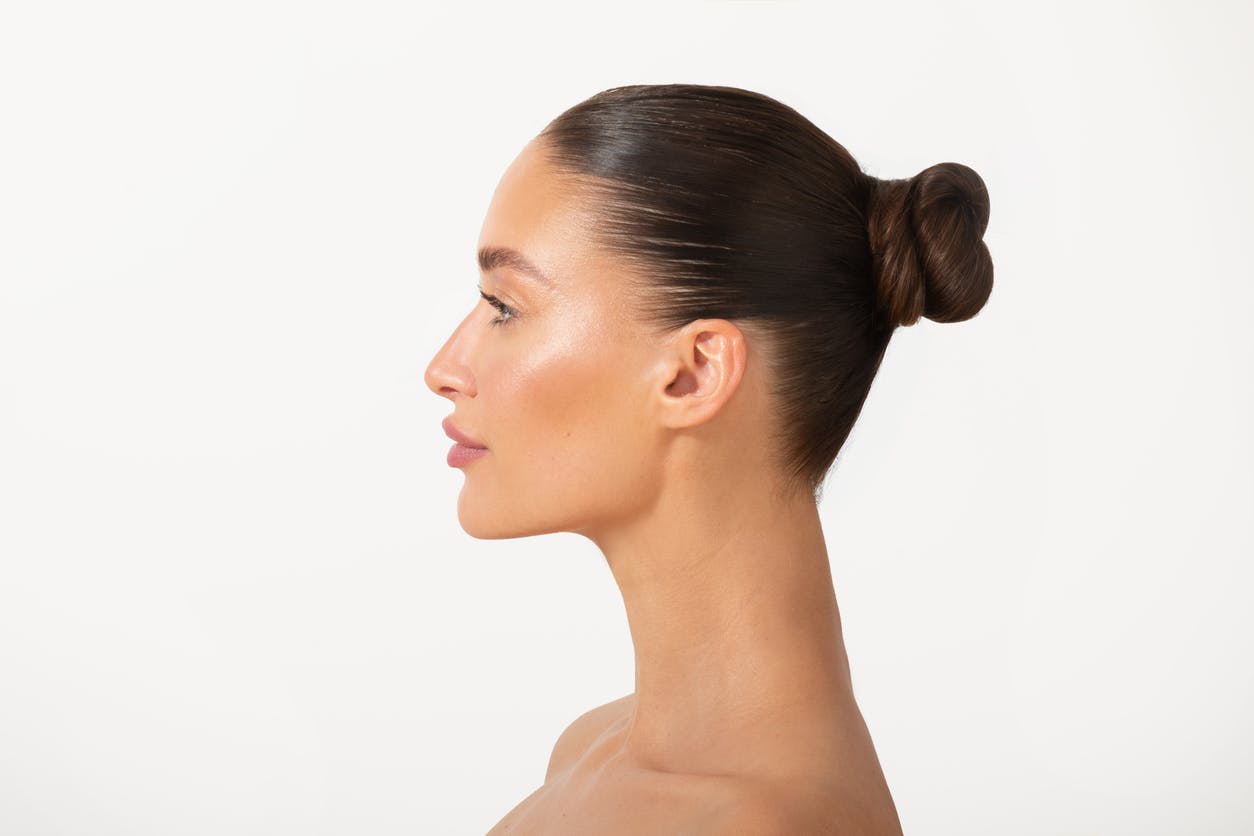
woman touching her face slightly

Benefits of Preservation Rhinoplasty

  • Natural-looking outcomes: Because the underlying architecture of your nose is preserved rather than rebuilt, results integrate seamlessly with your features. There's no "pinched" look, no stiffness, just a refined version of what was already there.
  • Reduced swelling of the nasal bridge: Less tissue disruption means the body has less to heal. Most patients notice a meaningful reduction in swelling compared to traditional rhinoplasty, with final results appearing sooner.
  • Lower risk of over-resection: One of the most common complications of traditional rhinoplasty is removing too much, leaving the nose structurally weakened or aesthetically hollow over time. Preservation technique minimizes this risk by working within the existing framework.
  • Lasting results: By maintaining the natural ligamentous support of the nose, preservation rhinoplasty produces results that age gracefully alongside your face.
  • Few visible surgical signs: Preservation rhinoplasty is unlikely to produce the subtle hallmarks of nasal surgery—the slight irregularities, the shadow lines, the loss of natural movement—that can appear years after a traditional procedure.
Logo media

Preservation Rhinoplasty vs. Other Rhinoplasty Techniques

  • Structural (Reduction) Rhinoplasty involves more extensive reshaping and reconstruction and remains the preferred technique for complex cases, significant tip work, or patients with prior nasal surgery
  • Ethnic Rhinoplasty honors and preserves the ethnic characteristics of your nose while achieving your aesthetic goals—a specialty Dr. Porter has championed throughout her career, attracting patients from around the world
  • Revision Rhinoplasty addresses outcomes from a previous rhinoplasty procedure and is among the most technically demanding surgeries in facial plastic surgery
  • Closed (Scarless) Rhinoplasty places all incisions inside the nostrils, leaving no visible external scarring, which is an option Dr. Porter and Dr. Watkins consider when anatomy and goals allow

What to Expect Before, During, and After

Consultation

During your thorough, unhurried consultation with Dr. Watkins, she will evaluate your nasal anatomy, discuss your aesthetic goals, and help you understand which techniques are best suited to your unique anatomy. MIRROR® imaging is available to help you visualize potential outcomes before committing to any plan.

The cost of preservation rhinoplasty at CCFPS varies based on several factors, including:

  • The complexity of your procedure
  • The techniques involved
  • Your individual anatomy and goals

Financing options are available, and your patient coordinator will walk you through all associated costs during your consultation with full transparency and no surprises.

Procedure

Preservation rhinoplasty is typically performed under general anesthesia and takes between two and three hours, depending on the scope of work involved. Dr. Watkins uses either a closed (endonasal) or open approach based on your anatomy and goals, with a preference for minimizing visible incisions wherever possible.

You can generally expect:

  • Accessing the nasal structure through carefully placed incisions
  • Lowering the dorsum as a unified anatomical unit, preserving the ligamentous attachments and soft tissue envelope
  • Refining the nasal tip and sidewalls as needed, using your existing cartilage as the foundation, ensuring symmetry, proportion, and natural movement before closure

Recovery and Results

Most patients return to desk work within seven to ten days. Bruising and swelling are typically less pronounced than with traditional rhinoplasty. Here is a general timeline of what to expect:

  • Week 1: A nasal splint is worn while initial swelling and bruising begin to subside.
  • Weeks 1-2: Most patients return comfortably to desk work and light daily activity.
  • Weeks 4-6: Strenuous activity, exercise, and contact sports can gradually resume.
  • Weeks 6-12: Swelling continues to resolve; meaningful improvement becomes visible.
  • 12 Months: Final results are fully visible.

Because the preservation technique maintains the natural tissue relationships of the nose, the transition from post-operative to final result tends to be smooth and predictable.

Background media
side profile of woman

Are You a Good Candidate for Preservation Rhinoplasty?

Preservation rhinoplasty is an excellent option for many patients, but candidacy depends on several anatomical and medical factors that Dr. Watkins evaluates carefully during your consultation. The technique works with your existing nasal structure, so that structure needs to support it.

You may be a strong candidate if:

  • Your primary concern is the nasal dorsum: The preservation technique is best suited to reducing a dorsal hump. It is less indicated for patients whose primary goals involve significant tip reshaping or narrowing.
  • Your skin thickness is in the moderate range: Very thick skin can obscure refinements; very thin skin can reveal minor irregularities. Medium skin thickness tends to yield the most predictable results.
  • Your nasal cartilage is sufficiently strong and well-positioned: The technique relies on repositioning existing structures, so adequate cartilage integrity is essential.
  • You have no significant septal deviation or functional obstruction that would require more extensive internal reconstruction: Septal deviation is a meaningful variable in preservation rhinoplasty planning.
  • This is your first rhinoplasty: Preservation techniques are generally not indicated in revision cases, where scar tissue and altered anatomy typically require a structural approach.

If your anatomy involves significant structural complexity, a deviated septum, prior nasal surgery, or extensive tip work, Dr. Watkins may recommend a structural or hybrid approach instead.

Logo media

Related Procedures

  • Facelift or Neck Lift for patients addressing aging alongside nasal refinement
  • Blepharoplasty (Eyelid Lift) to restore balance and openness to the upper face
  • Morpheus8 for non-surgical skin resurfacing and tightening that complements surgical results beautifully
  • Dermal Fillers/Non-Surgical Rhinoplasty for patients not yet ready for surgery, or looking to make subtle bridge or tip adjustments without going under the knife
Banner media

Why Choose Chevy Chase Facial Plastic Surgery?

Rhinoplasty isn't simply one of many offerings; it is a defining specialty of our practice. Dr. Jennifer Parker Porter established the Centre for Rhinoplasty here, equipping our team with MIRROR® computer imaging technology that empowers you to visualize potential outcomes in photographic detail before committing to surgery.

Dr. Watkins brings her own distinct layer of expertise to this legacy. Coaching-certified and steeped in a philosophy of holistic, long-term care, she approaches every rhinoplasty consultation as the beginning of an ongoing relationship, not a single transaction. Her background as a concertmaster and trained musician informs a surgical sensibility that, at its core, is about proportion, harmony, and the interplay of parts. That perspective translates directly to the operating room.

With more than 15,000 procedures performed across our practice, a 4.9-star rating from 268 verified reviews, and back-to-back recognition as Best Cosmetic Surgeon by Bethesda Magazine, CCFPS has built a reputation that speaks for itself.

Preservation Rhinoplasty FAQs

How is preservation rhinoplasty different from a "liquid rhinoplasty" or non-surgical nose job?

Will a rhinoplasty for preservation affect my ability to breathe?

Are the results of preservation rhinoplasty permanent?

Can preservation rhinoplasty be combined with other procedures?

What are the risks and potential side effects of preservation rhinoplasty?

At what age can someone undergo preservation rhinoplasty?

Does preservation rhinoplasty leave visible scars?

How is preservation rhinoplasty different from a "liquid rhinoplasty" or non-surgical nose job?

Non-surgical rhinoplasty uses injectable fillers to camouflage bumps or refine contours without surgery. It is a temporary solution, typically lasting twelve to eighteen months, and cannot reduce the size of the nose or correct structural issues. Preservation rhinoplasty is a surgical procedure that produces permanent, structural change. The two serve very different goals, though fillers can be a useful option for patients who want to preview changes before committing to surgery.

Will a rhinoplasty for preservation affect my ability to breathe?

In many cases, it can improve breathing. Breathing function is always assessed during your consultation with Dr. Watkins. If a deviated septum or other structural issue is contributing to nasal obstruction, it can often be addressed at the same time as your cosmetic procedure. Because preservation rhinoplasty causes less disruption to the internal nasal structures than traditional approaches, it is less likely to introduce new functional concerns post-operatively.

Are the results of preservation rhinoplasty permanent?

Yes. The structural changes made during preservation rhinoplasty are permanent. However, your nose will continue to change naturally with age. One of the key advantages of the preservation technique is that it maintains the natural ligamentous support of the nose, resulting in a graceful aging of the nose.

Can preservation rhinoplasty be combined with other procedures?

Yes, and it frequently is. It is common for patients to combine rhinoplasty with procedures such as chin augmentation to improve overall facial balance, or with non-surgical treatments like Morpheus8 to address skin quality alongside structural refinement. Dr. Watkins will discuss combination options during your consultation and help determine what makes sense for your goals and recovery.

What are the risks and potential side effects of preservation rhinoplasty?

As with any surgical procedure, preservation rhinoplasty carries risks. These include temporary swelling, bruising, and numbness around the nose and upper lip, which typically resolve over weeks to months. Less common but more significant risks include infection, asymmetry, unsatisfactory aesthetic outcomes, and the need for revision surgery. Because preservation techniques cause less structural disruption than traditional rhinoplasty, the overall complication profile is generally favorable. Dr. Watkins will discuss your individual risk profile during your consultation.

At what age can someone undergo preservation rhinoplasty?

Most surgeons recommend waiting until nasal growth is complete before pursuing rhinoplasty. This is typically around age sixteen for girls and seventeen to eighteen for boys, though individual development varies. There is no strict upper age limit, but overall health, skin quality, and healing capacity are factors Dr. Watkins will evaluate for older patients. A thorough consultation is the best way to determine whether the timing is right for you.

Does preservation rhinoplasty leave visible scars?

Scarring depends on the surgical approach used. When a closed (endonasal) technique is employed, all incisions are placed inside the nostrils and no external scarring is visible. When an open approach is necessary, a small incision is made across the columella, the narrow strip of tissue between the nostrils, which typically heals to a fine, barely visible line. Dr. Watkins favors minimizing visible incisions wherever anatomy and goals allow and will discuss the most appropriate approach during your consultation.

Preserve and Enhance What Makes You Unmistakenably Yourself

If you're considering preservation rhinoplasty, we invite you to schedule a personal consultation with Dr. Mariel O. Watkins at Chevy Chase Facial Plastic Surgery. Together, you'll explore your goals, review your options, and create a plan that respects your natural features.

Book Your Consultation Today or call us at 301.202.1271. We look forward to meeting you!

Disclaimer: This information is provided for educational purposes only and does not replace a consultation with a board-certified plastic surgeon. Outcomes, risks, and suitability vary from patient to patient.

Enhancing Your NaturalBeauty

Schedule a Consultation
Contact us media
Accessibility: If you are vision-impaired or have some other impairment covered by the Americans with Disabilities Act or a similar law, and you wish to discuss potential accommodations related to using this website, please contact our Accessibility Manager at (301) 652-8191.
Contact Us